
The Critical Role of Glass Thickness in Modern Bathroom Design
When you embark on a bathroom renovation in 2026, the decisions you make regarding material specifications carry significant weight, both literally and figuratively. One of the most frequent questions we encounter at Southern Glass Pros involves the ideal thickness for a shower glass partition.
This choice is not merely an aesthetic one, it is a fundamental engineering decision that affects the structural integrity, safety, and daily operation of your shower.
The glass industry has evolved rapidly, moving toward minimalist, high-end designs that favor transparency and clean lines. However, as the hardware becomes more discreet, the glass substrate must compensate by providing the necessary rigidity.
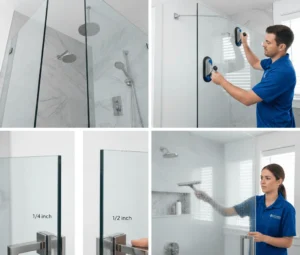
Understanding the nuance between a 1/4-inch panel and a 1/2-inch heavy glass unit is essential for any homeowner aiming for a blend of luxury and long-term durability.
In this deep dive, we will explore the technical standards of tempered safety glass, the relationship between thickness and frameless shower door stability, and how to select a thickness that complements your specific bathroom layout.
By the end of this guide, you will have the expert knowledge required to navigate the world of architectural glazing with confidence.
Standard Thickness Options for Shower Glass Enclosures
In the professional glazing trade, we primarily work with four standard thicknesses for residential bathroom applications. Each has a specific purpose, ranging from lightweight, budget-friendly framed units to the massive, stationary panels used in luxury walk-in showers.
In 2026, the trend has shifted heavily toward the thicker end of the spectrum as homeowners prioritize the “solid” feel of heavy glass.
The weight of the glass is a primary consideration, a square foot of 1/2-inch glass weighs approximately 6.4 pounds, meaning a standard door can easily exceed 80 pounds.
This requires heavy-duty hinges and a wall structure capable of supporting the lateral load. Conversely, thinner glass relies on a metal perimeter to provide the stability that the glass itself lacks.
Choosing the wrong thickness can lead to a variety of issues, including excessive deflection (bending), mechanical strain on the hinges, or a finished product that simply feels “flimsy” to the touch. Let’s break down the technical attributes of each standard measurement to see where they fit within your home.
1/4-Inch (6mm) Glass: The Entry-Level Standard
This is the thinnest glass used in the industry and is almost exclusively found in framed shower doors. Because it lacks the inherent rigidity to stand alone, it must be encased in aluminum framing on all four sides. This frame provides the structural support needed to keep the glass from bowing during use.
While 1/4-inch glass is common in high-volume construction and apartment complexes, it is rarely the first choice for custom renovations in 2026. The presence of heavy metal frames can clutter the visual field, making a small bathroom feel even tighter. However, for a simple sliding tub door, it remains a functional and lightweight option.
3/8-Inch (10mm) Glass: The Frameless Sweet Spot
For most homeowners looking for a frameless shower door, 3/8-inch is the industry gold standard. It offers a premium feel and excellent structural stability without the extreme weight of 1/2-inch panels. It is thick enough to be mounted with minimal hardware, such as pivot hinges or small clamping brackets.
This thickness provides a high level of impact resistance and minimizes vibration when the door is closed. It strikes a perfect balance between high-end aesthetics and manageable weight, making it compatible with a wider range of wall types and mounting surfaces without requiring extensive structural reinforcement.
1/2-Inch (12mm) Glass: The Ultimate Heavy Glass Experience
If you want the absolute pinnacle of luxury and stability, 1/2-inch glass is the answer. This is often referred to in the industry as heavy glass. It is incredibly rigid, offering virtually zero deflection even in large, floor-to-ceiling panels.
When you move a 1/2-inch door, the movement is smooth, silent, and feels remarkably substantial.
Because of its weight, 1/2-inch glass is typically reserved for stationary splash panels or high-end frameless doors where the hardware is specifically rated for the load.
It provides a striking, high-definition look, especially when paired with Low-Iron (Ultra-Clear) glass, which removes the green tint often visible on the thick edges of standard glass.
| Glass Thickness | Common Use Case | Support Requirement | Aesthetic Profile |
| 1/4″ (6mm) | Framed/Sliding Doors | Full Metal Perimeter | Traditional / Bulkier |
| 3/8″ (10mm) | Frameless Swing Doors | Hinges / Small Brackets | Modern / Minimalist |
| 1/2″ (12mm) | Luxury Frameless / Fixed | Heavy Duty Wall Mounts | High-End / Structural |
Safety and Building Codes: The Science of Tempered Glass
Regardless of the thickness you choose, safety is non-negotiable. Per the International Building Code (IBC) and CPSC standards, all glass used in a “wet environment” or “hazardous location” must be fully tempered.
This is a thermal process that increases the strength of the glass by roughly four to five times compared to standard annealed glass.
When glass is tempered, it is heated to over 1,100 degrees Fahrenheit and then rapidly cooled. This creates a state of internal tension. If the glass does break, it shatters into small, relatively harmless “dice” rather than jagged shards.
The thickness of the glass directly influences its load-bearing capacity and its ability to withstand accidental impacts from slips or falls.
In 2026, we also consider the edge-work as part of the safety profile. Thicker glass allows for a more pronounced flat polish or mitered edge, which not only looks beautiful but ensures there are no micro-fractures that could lead to spontaneous breakage.
A professional glazing contractor will always verify that every panel bears the permanent safety etch or “bug” indicating it meets national safety standards.
Deflection and Structural Rigidity
Deflection refers to how much a glass panel bends under pressure. In a shower enclosure, you want as little deflection as possible. A 1/4-inch panel of the same size as a 1/2-inch panel will bow significantly more when pushed.
Over time, this repetitive bending can stress the sealant joints or cause hardware to loosen, leading to leaks or mechanical failure.
Heat Soak Testing for Added Security
For high-end residential and commercial projects, some clients opt for heat soak testing. This is an additional process where tempered glass is placed in an oven for several hours to identify any rare impurities, such as nickel sulfide inclusions, that could cause the glass to break unexpectedly.
While rare, this level of quality control is a hallmark of professional glass services in 2026.
Aesthetics vs. Function: What Looks Best in 2026?
Aesthetic trends in 2026 are leaning toward “invisible” bathrooms. The goal is to make the shower disappear, allowing the tile work and fixtures to take center stage. Thicker glass helps achieve this by requiring less metal for support.
When you use 1/2-inch glass, you can often eliminate the header bar (the metal rail across the top), resulting in a truly seamless look.
However, “looks best” is subjective and often depends on the scale of the bathroom. In a compact guest bath, 3/8-inch glass might look more proportional and less imposing than a massive 1/2-inch slab.
Conversely, in a large master suite with a double-entry shower, the presence of heavy glass adds a layer of architectural significance that thinner glass cannot match.
Another factor is the edge color. As mentioned, standard glass has a natural green hue due to iron content. This green becomes more pronounced as the glass gets thicker.
To maintain a truly neutral and high-end look, we often recommend Low-Iron glass for 1/2-inch installations. This ensures that the edges appear crystal clear, complementing white or light-colored marble and tile.
Minimalist Hardware and Glass Thickness
The thickness of your glass dictates the type of hardware you can use. Square-cornered hinges and low-profile clamps look spectacular on 1/2-inch glass because the hardware can be recessed or mounted with high precision.
If you are aiming for a minimalist aesthetic, the thickness of the glass becomes your primary structural element, allowing the metal to fade into the background.
Lighting and Refraction
Thicker glass interacts with light differently. The polished edges of a 1/2-inch panel catch the light from recessed bathroom lighting, creating a subtle “glow” along the perimeter of the enclosure.
This contributes to a high-end, gallery-like feel that enhances the overall ambiance of the room, turning a functional space into a design statement.
The Impact of Thickness on Installation and Longevity
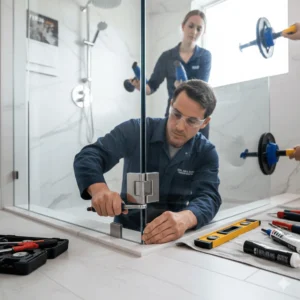
The physical installation of a shower enclosure becomes exponentially more complex as the glass thickness increases. Handling heavy glass requires specialized suction cups, lifting equipment, and a team of experienced glaziers. It is not a DIY task.
The precision required to set a 100-pound panel into a U-channel with only a 1/16-inch margin for error is significant.
Longevity is also directly tied to thickness. Thicker glass is less prone to “chattering” or vibrating when the door is operated. This lack of vibration means that the pivot points and gaskets experience less wear and tear over the years.
A well-installed 1/2-inch or 3/8-inch door can easily last decades with minimal maintenance, whereas thinner glass units often require hardware adjustments or sealant repairs much sooner.
In 2026, we also see an increase in the use of hydrophobic coatings applied during the fabrication process. These coatings are easier to apply and maintain on thicker, more stable glass surfaces.
Because the glass doesn’t flex as much, the coating is less likely to experience microscopic “cracking” at the bond level, keeping your shower cleaner for longer.
Wall Reinforcement and Substrate Prep
Before installing heavy glass, we must verify that the wall is structurally sound. Standard drywall with a thin metal stud is often insufficient for a 1/2-inch swinging door.
We recommend that builders and remodelers install solid wood blocking (usually 2×6 lumber) behind the tile at all hinge and clamp locations to ensure the fasteners have a secure bite.
Sealant Integrity and Water Retention
Thicker glass allows for more surface area at the joints, which provides a better bond for structural silicone. This results in a superior water seal. In curbless shower designs, where water retention is a major concern, the stability of 1/2-inch glass ensures that the panels don’t shift or vibrate, maintaining the integrity of the waterproof barrier at the floor level.
Decision Matrix: Choosing the Right Thickness for Your Project
To simplify the decision-making process, we evaluate each project based on three primary pillars: the design style, the opening size, and the budgetary framework. While we don’t discuss specific prices, it is a fact of manufacturing that thicker glass requires more raw material and more intensive tempering and handling.
If your design calls for a completely frameless look with no metal header across the top, 1/2-inch glass is almost always the required choice for the stationary panels to ensure they don’t wobble.
If you are looking for a standard swinging door with a small side panel, 3/8-inch is usually the most efficient and aesthetically pleasing option.
For sliding shower systems, 3/8-inch is often preferred because it reduces the load on the rolling mechanism, ensuring a smoother “glide” without sacrificing the premium feel. In 2026, many of the most advanced barn-door style sliding systems are specifically engineered for the weight and profile of 3/8-inch glass.
Assessing the Opening Size
The wider the glass panel, the thicker it needs to be. A narrow 12-inch return panel can be safely made from 3/8-inch glass, but a large 48-inch fixed splash guard will likely require 1/2-inch glass to prevent it from flexing when touched.
Our team at Southern Glass Pros performs a full wind-load and static-load analysis for every custom enclosure we design.
Daily Usage and Household Dynamics
Consider who will be using the shower. In a high-traffic family bathroom, the added durability and “break-resistance” of 1/2-inch glass can provide extra peace of mind.
While all tempered glass is safe, the sheer mass of heavy glass makes it incredibly difficult to damage through normal daily use, making it a “buy once, cry once” investment for the life of the home.
Maintenance Tips for Heavy Glass Enclosures
Once your new shower door is installed, maintaining its clarity is the next priority. In 2026, the best practice is still a simple squeegee after every use.
Because thicker glass has more surface area on the edges, you want to ensure that water doesn’t sit in the joints or along the bottom channel, which can lead to calcium buildup.
Avoid using abrasive cleaners or pads that could scratch the surface of the glass or damage the metallic hardware finishes. A mild solution of dish soap and water, or a specialized non-ammonia glass cleaner, is all you need to keep 3/8-inch or 1/2-inch glass looking like new.
If you have Low-Iron glass, keeping it clean is even more important, as its high transparency makes even minor streaks more visible.
If you notice any squeaking or if the door starts to sag, it is important to call a professional for an adjustment. Heavy glass puts significant pressure on hinges, and a minor adjustment to the set screws or gaskets can prevent the glass from making contact with the floor or adjacent panels, which could cause a fracture.
Managing Hard Water and Limescale
The coastal water in our region can be high in minerals. We highly recommend a factory-applied glass protectant. These coatings fill the microscopic “pores” of the glass, creating a surface so smooth that water and soap scum simply slide off.
This is especially effective on 1/2-inch glass, where the large surface area can otherwise be a chore to clean.
Checking Hardware Tension
Once a year, it is a good idea to verify that the hardware is still tight. Over time, the constant swinging of a heavy glass door can cause slight shifts.
Ensuring that the hinge plates are flush and the polycarbonate seals are still soft and pliable will keep your shower leak-free and operating silently for decades.
Why Southern Glass Pros for Your Shower Installation?
Choosing a glass shop is about more than just finding a supplier, it’s about finding a partner who understands the local environment and the technical demands of structural glazing.
At Southern Glass Pros, we bring years of experience to every bathroom project, ensuring that your glass thickness is perfectly matched to your design goals and safety needs.
Our technicians are trained in the latest 2026 installation techniques, using precision tools to ensure that your shower is plumb, level, and perfectly sealed. We don’t believe in “one size fits all” solutions.
We take the time to evaluate your specific space and provide recommendations that balance beauty with long-term performance.
From frameless shower door installation to custom glass partitions, we handle the entire process with the care and attention to detail that your home deserves. We are committed to using only the highest quality tempered safety glass and premium hardware to ensure your complete satisfaction.
Local Expertise in the Grand Strand
We understand the specific challenges of coastal living, from humidity management to the structural requirements of homes in high-wind zones. This local expertise allows us to recommend materials and installation methods that are specifically suited for the South Carolina and North Carolina coastal regions.
Commitment to Professionalism and Safety
Safety isn’t just a buzzword for us, it’s the foundation of our business. Every project we undertake is fully insured and performed by glazing experts who follow strict safety protocols. When you work with us, you can rest assured that your new glass feature is as safe as it is beautiful.
Service Areas for Professional Shower Door Installation
We are proud to offer our specialized services across a wide range of communities. Our team is frequently on the road, bringing high-end glass solutions to homeowners throughout the region.
Main service areas for Southern Glass Pros shower door installation:
The Final Word on Glass Thickness
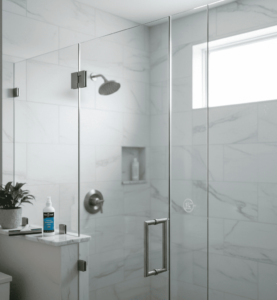
Choosing the right shower door glass thickness in 2026 comes down to a balance of your aesthetic vision and the physical requirements of your bathroom layout.
While 1/4-inch glass is suitable for framed designs, the modern standard has shifted toward 3/8-inch and 1/2-inch glass to achieve the clean, frameless looks that are currently in high demand.
Remember that with greater thickness comes greater weight and the need for professional handling and structural support. By choosing the right thickness and a qualified glazing team, you ensure that your bathroom renovation is a safe, beautiful, and long-lasting addition to your home.
Whether you prefer the versatile elegance of 3/8-inch glass or the uncompromising luxury of 1/2-inch heavy glass, the key is quality. Invest in tempered safety glass, select the right hardware, and follow a consistent maintenance routine to keep your shower looking pristine for years to come.
Contact Southern Glass Pros Today
Are you ready to elevate your bathroom with a custom shower enclosure? Our team is standing by to help you choose the perfect glass thickness and design for your space. We offer expert advice, precision measurements, and professional installation that you can trust.
Don’t wait to start your transformation. Reach out to our team of experts today!
Visit our Contact Page for more information
Call us now for a consultation:
(843) 474-5615
(843) 808-9024
(843) 999-8802
Southern Glass Pros: Your local experts for all things glass in 2026.